
An employee asks to leave work early to vote. Do you have to approve the request? Is that time paid? And can you require the employee to vote outside normal working hours instead?
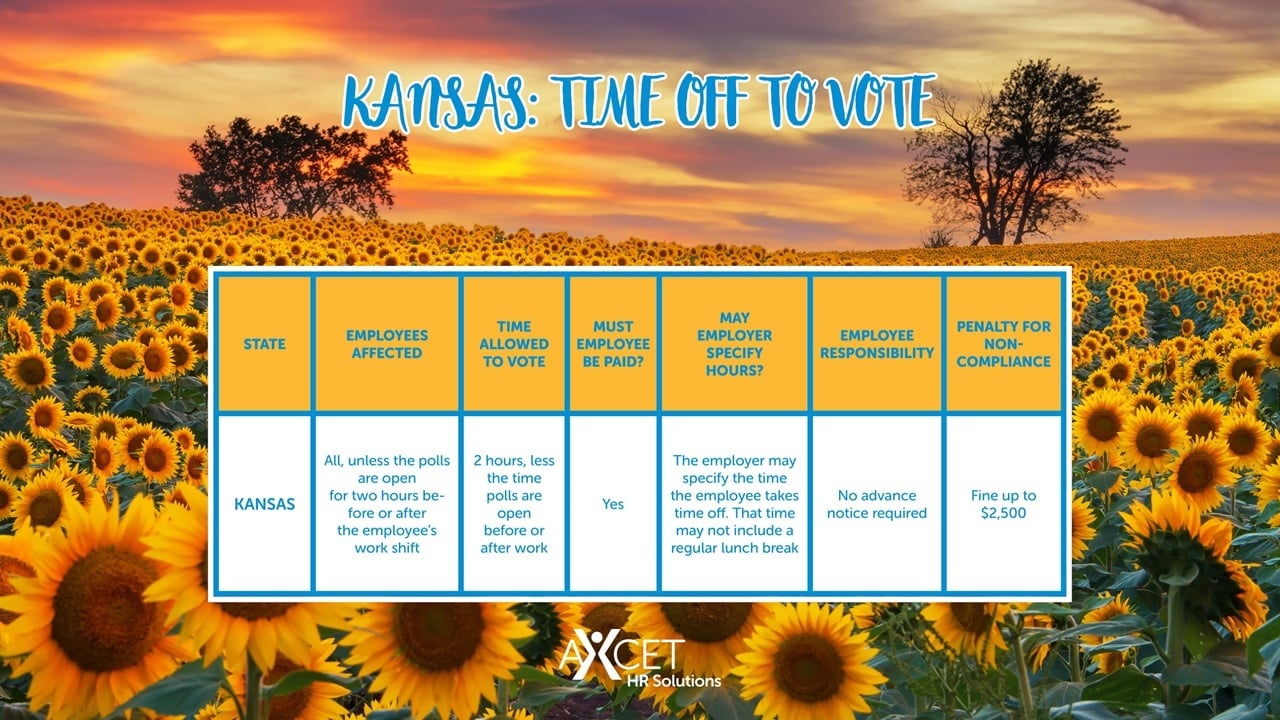
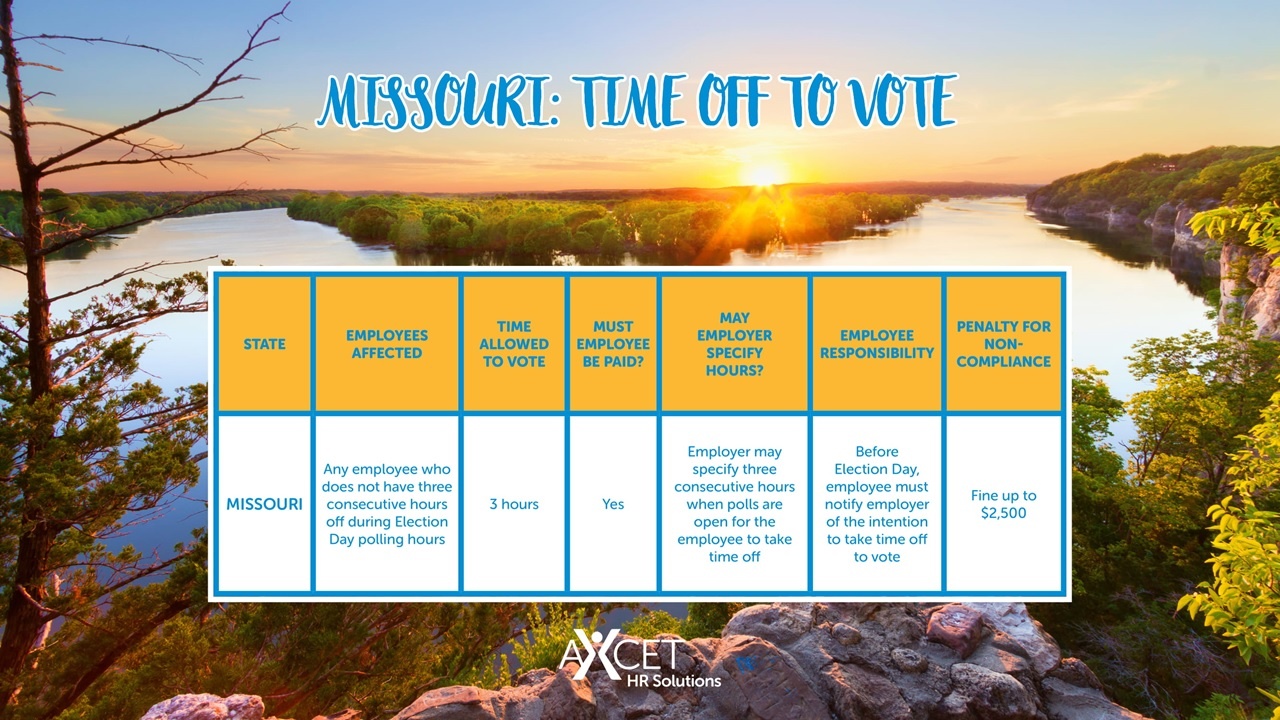
While federal law generally doesn't require private employers to provide time off to vote, many states do. In Kansas and Missouri, employees have specific rights to paid voting leave when their work schedules don't provide sufficient time to get to the polls.
Here are four guidelines to help employers understand voting leave requirements, avoid compliance mistakes and prepare for Election Day.
Depending on the states your businesses operate in, the laws will vary. Here are four employer guidelines for the upcoming Election Day.
As of 2026, 28 states and Washington, D.C., require employers to provide some form of time off to vote. However, voting leave laws vary significantly, including how much time employees can take, whether leave must be paid, advance notice requirements and when employers may schedule the absence.
For businesses operating in multiple states, understanding these differences is essential. Here's what employers should know about voting leave laws in Kansas and Missouri.

Download or print the Kansas time off to vote laws here >>

Download or print the Missouri time off to vote laws here >>
Business owners or HR managers should advise employees how much voting time can be taken off from work, if it’s paid or unpaid, when and if employees must provide advance notice, and if the employer or employee must specify the timeframe for voting. Some states require notices to be posted in the workplace, allowing employees to be informed of their rights prior to Election Day.
Employers can encourage civic participation by reminding employees about Election Day, sharing nonpartisan voting resources and helping them understand available voting leave.
Even where paid voting leave isn't legally required, businesses may choose to provide additional flexibility so employees can participate. However, voluntary policies must not replace or reduce leave required by state law.
Employers should also avoid pressuring employees to support particular candidates or political positions. Threatening employees, retaliating against them or linking employment benefits to voting decisions can create serious legal risks.
The goal is to make voting accessible while respecting employees' individual choices.
Private-sector employers generally have the right to establish policies limiting political discussions during working hours, particularly when those conversations disrupt productivity or create workplace tension.
However, policies must be applied consistently and cannot interfere with employees' legally protected rights to discuss wages, benefits or working conditions, even when those conversations involve political issues.
Setting clear expectations can help employers minimize workplace conflicts while maintaining a respectful, productive environment.
From voting leave and jury duty to FMLA and paid sick leave, employers must navigate different requirements across federal, state and local laws. For businesses operating in Kansas, Missouri or multiple states, keeping policies compliant can be challenging.
Axcet HR Solutions, a Kansas City-based certified PEO serving small and mid-sized businesses coast to coast, helps employers understand their obligations, develop compliant leave policies and stay ahead of changing employment laws.
Not sure whether your employee leave policies meet current requirements? Schedule a consultation with Axcet's HR experts.

Written by
Jeanette Coleman, SPHR, SHRM-SCP, is the Director of Human Resources at Axcet HR Solutions, where she has contributed her expertise for over 21 years.
As a leader in the HR industry, she holds advanced certifications as a Senior Professional in Human Resources (SPHR) and SHRM-Senior Certified Professional (SHRM-SCP). Jeanette oversees HR strategy and operations, ensuring Axcet delivers exceptional HR services that help small and mid-sized businesses stay compliant and grow.
With a Master’s degree in Human Resource Management from Keller Graduate School and a Bachelor of Science in Business Administration from Kansas State University, Jeanette is well-equipped to lead and support clients in navigating complex HR challenges.
Throughout her 15-year tenure as Director of Human Resources, she has been instrumental in positioning Axcet as the Midwest’s largest and premier Professional Employer Organization (PEO). Her previous roles at Axcet include Director of Employee Benefits and Senior HR Consultant, where she gained extensive experience in HR outsourcing, and employee risk management.
Jeanette’s expertise has been recognized through industry and regional publications. She co-authored the article “High-Touch in the Age of High-Tech: How PEOs Can Embrace AI Without Losing Their Humanity” (https://peoinsider.org/articles/high-touch-in-the-age-of-high-tech-how-peos-can-embrace-ai-without-losing-their-humanity/) for PEO Insider (March 2026), alongside Jo McClure, and was featured in Ingram’s Magazine in a Q&A (https://ingrams.com/article/qa-with-jeanette-coleman/) discussing generational change, technology, and workplace culture. These contributions reflect her perspective on balancing innovation with the human side of HR.
Jeanette’s leadership reflects her deep commitment to helping businesses thrive through strategic, compliance-driven HR solutions. Through her writing, she shares insights on HR strategy, compliance, and best practices to help employers confidently manage their workforce.
Published in: PEO Insider and Ingram's



Let us know what you think...